Join Learning for Justice and cohosts from the Smithsonian Science Education Center for a webinar on integrating social justice into your practice as a science educator!
Like many, if not most, I had a rough first year as a teacher. I was 21 years old and full of passion and desire but little else. I had survived student teaching on the Navajo Reservation for six months, but arrived on the other side of that experience with much to learn. I was teaching two-hour blocks of seventh-grade history and English. I was struggling on almost every level in almost every area.
In early 1968, Martin Luther King Jr. and other civil rights leaders continued plans for a Poor People’s Campaign. It would take place in the spring in Washington, D.C. The poor and those in solidarity with them would take up temporary residence and march peacefully on the Capitol and advocate for substantial anti-poverty legislation from Congress. They would demand jobs, healthcare and decent housing.
“To err is human” but to reflect is divine. Teachers are human. We get frustrated, lose our tempers, make bad judgment calls and sometimes wish for a do-over button. Unfortunately, there isn't a magical reset button—or is there? Being an effective, successful teacher does not mean you never make mistakes. It just means we need to learn from them.
In the second of a three-part series, this new-educator mentor explains how to build beginning teachers’ strengths in culturally and linguistically responsive practices.
Educators are natural cheerleaders, fierce protectors, and they rally when needed. That’s why we turned to the Teaching Tolerance community of educators for advice to offer first-year teachers. More than 100 of you responded, rallying around all the newbies. The advice ranged from practical (get rest, get a flu shot, get organized) to pensive (trust your instincts, remember each student has dignity).
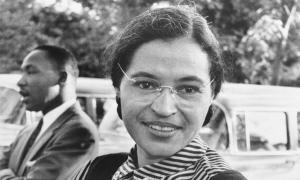
When Idaho Rep. Brent Crane characterized Rosa Parks as a champion of states’ rights in a recent debate, it was a troubling sign of what happens when a nation doesn’t work hard to remember its history.