Join Learning for Justice, along with experts from Northern California public media station KQED, for a webinar on thoughtful, impactful and critical media creation!
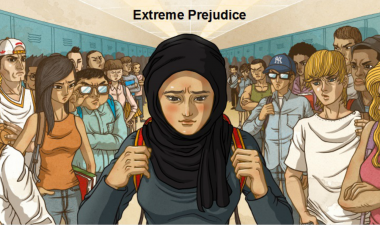
Join Learning for Justice, the SPLC's Intelligence Project and Retro Report for a webinar on responding to hate and antisemitism and developing media literacy in students.
Join antiracist education experts Dr. Sonja Cherry-Paul and Tricia Ebarvia together with Learning for Justice for this thought-provoking webinar highlighting the importance of diversifying classroom texts.
Join Learning for Justice, experts from ImmSchools and the Southern Poverty Law Center’s Immigrant Justice Project for a webinar on supporting immigrant students and families.
Join Learning for Justice and cohosts from the Smithsonian Science Education Center for a webinar on integrating social justice into your practice as a science educator!
Co-hosted by experts from the National Gallery of Art, this webinar will offer new understandings of American visual art and its role in helping us understand our history.
Learning for Justice and cohosts from SPLC’s Intelligence Project and American University’s Polarization and Extremism Research Innovation Lab (PERIL) present a webinar on combating the radicalization of young people online.
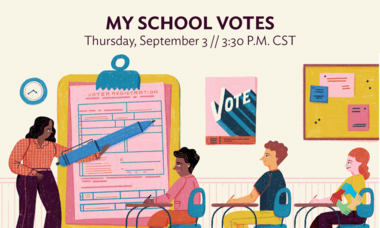
Tune in to this webinar to get your high school students ready to vote! Along with special guest and My School Votes Director Andrew Amore, we will go over strategies for building school-based voter registration campaigns.
Co-hosted by former Learning for Justice Advisory Board members Kinette Richards, Ph.D., school psychologist, and Barbie Garayúa Tudryn, school counselor, this webinar will help you gain a common understanding of trauma and how it affects both learning and relationships at school—for students and educators alike.
Join Learning for Justice for a webinar on the importance of educators practicing self-care. Featuring middle school literacy coach Geneviéve DeBose and school social worker Shoshana Brown.
Cohosted by Dr. Charles Barrett, Chair for the National Association of School Psychologists Multicultural Affairs Committee, this webinar focuses on challenges students face regarding mental health, including how those challenges can vary.
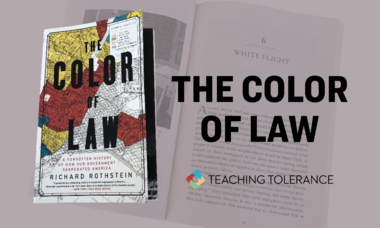
Join Learning for Justice and Director Maureen Costello as we explore the role of U.S. segregation in everything from housing to employment to wealth accumulation—and the policies that made it all happen. Tune in to learn why the “bootstraps theory” doesn’t hold up and gain some useful tools for your classroom practice.
Co-hosted by experts from the Smithsonian National Museum of the American Indian, this webinar will delve into the ways American history instruction often fails to acknowledge—and contributes to—the erasure of Indigenous stories and perspectives.
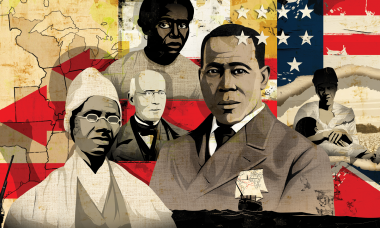
Join Learning for Justice for a deep dive into our brand-new Teaching Hard History framework for grades K–5! Participants will learn how our elementary framework centers the stories of enslaved people to teach the history of American slavery in a way that is both age-appropriate and accessible.
In honor of Asian American and Pacific Islander (AAPI) Heritage Month, join LFJ in unpacking the origins, meaning and contemporary impact of the term "Asian American Pacific Islander." We will also break down the model minority myth and provide educators with resources to effectively teach AAPI history.
This webinar will clarify the confusion between race and ethnicity, provide a historical primer on Afro-Latinx identities and review resources for teaching Elizabeth Acevedo’s poem “Afro-Latina.”
What is white privilege, anyway? And do we really need to teach about it? Join former Teaching and Learning Specialist Stef Bernal-Martinez and anti-racist educator and scholar Ronda Taylor Bullock for this interactive, research-rich opportunity to explore white privilege and help you create a more racially just classroom and community.
Want to better support LGBTQ students in your classroom? Based on our Best Practices for Serving LGBTQ Students, this webinar models how to create an inclusive classroom culture and build an intersectional curriculum that incorporates queer history and perspectives.
Help young students learn the meaning and value of Identity, Diversity, Justice and Action—the four domains of the Learning for Justice Social Justice Standards. Find out how to implement these activities in your classroom with this exciting webinar!
With Teaching Hard History, we’re calling on American educators, curriculum writers and policy makers to confront the fact that slavery and racial injustice are not only a foundational part of the nation’s past, but a continuing influence on the present.
Are you looking for culturally responsive ways to support English language learners? Based on our recently updated ELL best practices guide, this webinar presents specific tools and strategies for supporting ELLs in instruction, family engagement, classroom culture and school policies.
In the last webinar of our series on school climate, NEA and Learning for Justice will offer strategies for responding to biased remarks in a timely manner and helping students to do the same.
Can your students tell the difference between real news and “fake” news? Do they have the tools to speak up when they witness offensive speech online? Learning for Justice is proud to introduce our newest collection of K–12 lessons to help students learn to be responsible digital citizens.
In this first of three school-climate webinars with NEA and Learning for Justice, you will reflect on your school's climate, identify existing policies and procedures for responding to incidents of hate and bias, and learn how to draft an action plan.
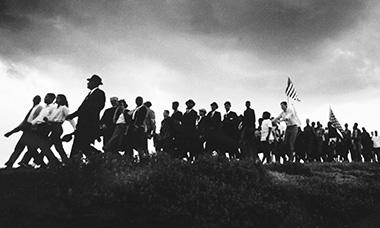
This session examines the five essential practices for teaching about the Civil Rights Movement, educate for empowerment, know how to talk about race, capture the unseen, tell a complicated story and connect to the present.
Join Learning for Justice and the Anne Frank House in Amsterdam to learn how to incorporate the Diary of Anne Frank into discussions on identity, exclusion and persecution.
The final webinar in the Equity Matters series will address how to move from a deficit-based approach to an equity-literacy framework for meeting the needs of students and families experiencing poverty.
This sequel to Let's Talk! Discussing Black Lives Matter in the Classroom reviews the education related policy demands within the Movement for Black Lives' platform: Invest-Divest and Community Control.
In the second Equity Matters webinar, educators will discuss family engagement as one of many keys to student success. Find out how to implement home visits as a way to effectively and positively interact with students, families and communities.
The first webinar in the Equity Matters series will discuss the importance of empathy in our interactions with students and in students' interactions with others.
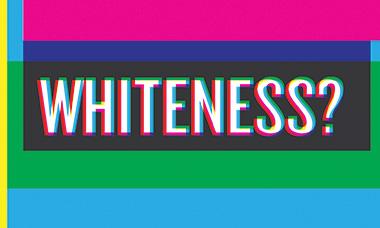
In this interactive webinar, we'll discuss whiteness as a racial identity with the understanding that acknowledging whiteness and the privilege and power attached to it is a necessary step in working toward racial justice.
In this webinar we'll introduce Arthur-related digital resources and strategies that can help you incorporate social and emotional learning in the classroom while supporting critical literacy.
Need tips for responding to student behavior and keeping learning on task? We created this webinar for you, with input from over 1,200 educators who completed our classroom management survey.
For this third part in the Let's Talk! series, Learning for Justice and Gender Spectrum are teaming up to help educators think beyond the gender binary and to create gender-inclusive classrooms.
View this webinar to learn relaxation strategies, planning tips for next year and ways to fill your "compassion tanks" over the break. Join us and give back to yourself! You deserve it.
Intersectionality has become a buzzword in education, but what does it mean and why is it important in schools? This webinar will help participants understand intersectionality and offer strategies for putting knowledge into practice.
Join us and our friends from the Tanenbaum Center for Interreligious Understanding for this one-hour webinar, and learn try-tomorrow strategies that can help you teach about extremism accurately, responsibly and safely.
In this webinar, participants will learn how to use Reading Diversity to select texts that reflect their students' identities and offer them windows into the diverse lived experiences of others.
Are you looking for fun and creative ways to engage your students in anti-bias learning? This webinar will feature entertaining team-building activities you can use in your classroom tomorrow.
Join Learning for Justice as we address these concerns with the support of Johanna Eager, director of Welcoming Schools. During this informative, interactive and insightful conversation, she'll share her expertise in bias-based bullying in schools, with emphasis on intersectionality, gender and LGBT inclusivity.
This webinar will prepare educators to use the approximately 45 days between the King holiday and the end of February to engage all students in recognizing and understanding how Black Americans have moved United States and world history forward. Join Learning for Justice as we share practices and strategies for celebrating the contributions of African Americans, whether they are household names or unsung heroes.
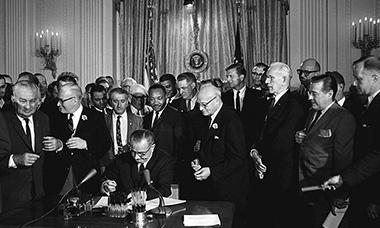
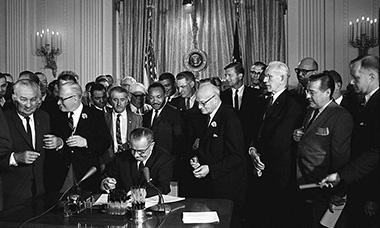
View this webinar to learn about how you can help your students understand the use of primary sources to discuss the Civil Rights Act of 1964 and the events and people surrounding it.
This webinar walks participants through the teaching guide for Michelle Alexander's The New Jim Crow: Mass Incarceration in the Age of Colorblindness. The guide provides resources and support educators and students need to explore the critical social justice issues at the center of Alexander's work.
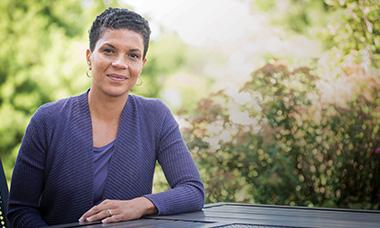
Join Learning for Justice and Michelle Alexander, author of ‘The New Jim Crow: Mass Incarceration in the Age of Colorblindness’, to discuss her timely book and suggestions to introduce high school students to topics such as mass incarceration and racial caste.