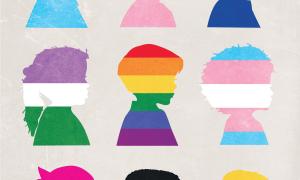
Banning a book can go like this: An outraged parent complains about a book to the school librarian or principal. After a noisy debate, the school administrators decide that the book should be removed from circulation. Or, banning a book can go like this: A librarian receives a new book. Perhaps it shows LGBT issues or atheism in a sympathetic light. Perhaps it portrays civil rights struggles in a way that might offend some local sensibilities. Whatever the reason, she quietly puts the book in a back room. Then she politely discourages questions about it.
I don’t remember much about my elementary school experience. But I do remember our class field trips. Field trips are more than a “vacation” from school. Coupled with meaningful and relevant lesson objectives, a field experience can engage students in learning and leave a lasting imprint.
For people who complain about a “war on Christmas,” here’s a reality check. If you’re Christian in the United States, you can generally practice your religion without constraint. Assuming you don’t force your faith on others, being devout is not likely to cost you your job.
A strategy for organizing medium- to large-group discussions. Students are separated into an inner and outer circle. In the inner circle, or fishbowl, students have a text-based discussion; students in the outer circle listen to the discussion and take notes.
Whatever situation you're in, remember these six steps to help you speak up against everyday bigotry. In any situation, however, assess your safety, both physical and emotional. There is a risk, and that must be acknowledged as you make your own choice to Speak Up!
A guide to help students interpret, analyze and evaluate information encountered in a variety of media formats. Use this guide with the spoken and performed texts included in the Perspectives anthology.