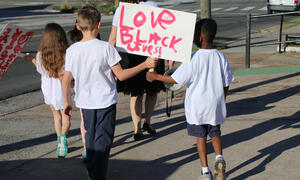
As a child, Jo Ann Bland participated in the Selma, Alabama, march that became known as Bloody Sunday. In this video and Q&A excerpt, Bland inspires us to civic action.
What does "white anti-racist" mean? How can guilt get in the way? And what's all this talk about being "colorblind"? Learning for Justice, then Teaching Tolerance, asked community activists to share their thoughts on these questions, and others. Their answers shine light on the concepts of comfort, power, privilege and identity.
Vouchers are part of a broader effort to dismantle public schools, moving public taxpayer funds into private for-profit institutions. This is the third of three articles on public schools as a common good, which explore the possibilities and threats to public education.
One Learning for Justice staffer reflects on the harm she experienced when her educators ignored Black History Month—and calls on all educators to uplift the value in Black history all year.
This lesson is the second lesson of the series The Color of Law: The Role of Government in Shaping Racial Inequity. In this lesson, students examine how government policies helped white people access economic benefits while preventing African Americans from accessing these same benefits.
On the rare occasion that I spend time with people who are not educators, it’s inevitable that someone will drop the word “retarded.” The “R-word” has been used colloquially for decades to describe and degrade anyone or anything out of the ordinary, inferior, or somehow slow. I can still hear the snickers from my own classmates back in 10th-grade health class when we read the words “fire retardant” in our textbook.
As we encourage students to take action against injustice, what are we doing to support them in this work? An educator offers five practical lessons she’s learned in doing just that.