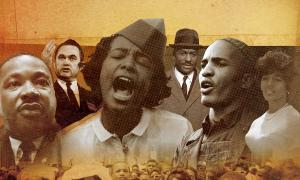
Don’t sugarcoat history in teaching the civil rights movement. Students deserve the full truth about both the racial bias that caused it and our hesitant steps toward freedom.
Ava, an 8th-grade student in my after-school creative writing class came to me to discuss a story she was working on. She was writing a fictional story about a gay teenager who struggles with his sexuality and coming out. Even early on in the process, I was impressed with her ability to look at this story as a complex study in understanding—giving a voice to, and respectfully exploring, the conflicts of a gay teen.
Every city, town and hamlet has them: monuments commemorating pivotal events; memorials to heroes; parks, schools and public buildings named in honor of someone whose legacy is worth preserving.
We know little about the motives of the gunman who opened fire yesterday in a Sikh temple in Oak Creek, Wisconsin. Many of us will monitor the news during the day, hoping to learn more about what the shooter thought he was doing, sure to hear more about the heroism and horror inside the building.
During Ramadan, some Muslim students in this educator's school spent time in the media center during lunchtime, but most suffered in the cafeteria. She and her staff worked to change that.
When JT Eberhard of the Secular Student Alliance (SSA), an organization providing support to nontheistic students, received a letter from a teacher bragging about blocking formation of an atheist club, the lack of a return address didn’t slow him down. He used the email address provided by the sender to locate the teacher and alert administrators.
It’s summertime, and students have replaced class time with free time. In the wake of the Trayvon Martin shooting, parents and teachers are painfully aware of the widespread racial profiling targeting men of color—particularly younger men who are more apt to be out and about during these summer months.