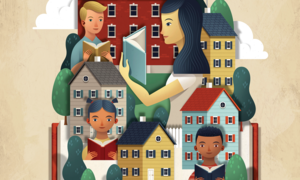
Many educators profess, as a virtue, that they treat all students the same. But when a student’s specific needs and story are erased, it’s not equitable—it’s damaging.
A new third-grader arrives at your school. He is blind. He is autistic. He is developmentally delayed. How does your school deal with the special needs of this child?
I stood beside Samara, my appointed student leader, with my lips shut tight, overly expressive eyes and a dry-erase marker in hand. I was ready to respond to my students in writing on the 13th annual National Day of Silence.
Last spring, our high school performed The Crucible, Arthur Miller’s play about the Salem witch trials (also an allegory of the witch hunts of McCarthyism). It’s one of my favorite plays. Watching the performance, I was struck by the character of Reverend Hale.
When I teach lessons about Martin Luther King Jr., I always wonder exactly how students will connect with the events and themes. My adult students are refugees and immigrants from different cultural backgrounds. Some of them were cultural minorities in their countries. Others are experiencing racial discrimination for the first time in the United States.
Most students have heard Dr. Martin Luther King Jr.’s “I Have a Dream” speech. They also know of Rosa Parks’ refusal to move to the back of the bus. Unfortunately for many students, knowledge of the civil rights movement stops there.