article

164 Results
text
Multimedia
The Day of Mass Removal: Kara Kondo

Kara Kondo: I can always picture [the scene]. The sun was setting and the crowd was gathering where the people — some of your friends — and there were hundreds of people there. Some were there to say goodbye, others came
February 5, 2019
July 6, 2009
text
Informational
Atlanta Compromise 1895
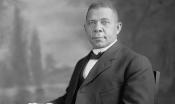
Regarded as one of the most important speeches in American history, it was delivered by Booker T. Washington as a plea for racial cooperation in the South during a time of deep racial prejudice.
July 16, 2018
article
A Garden of Honor
Latino students in East L.A. plant a tribute to Japanese Americans.
article
A Town, a Teacher and a Wartime Tragedy
On the arid flatlands near the small town of Delta, Utah, 140 miles southwest of Salt Lake City, the scorching summer winds whip dust through the dry brush, and winter cold freezes the ground under a blanket of snow. In this forbidding landscape lie remnants of an American tragedy -- an internment camp that housed over 8,000 Japanese Americans behind barbed wire and armed guards during World War II. Named for a barren nearby mountain, the camp became known as Topaz.
article
'We were still the enemy'
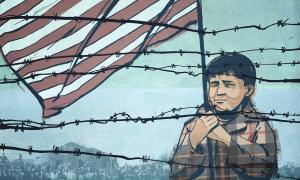
Kenji Ima recalls life in America's World War II prison camps. His daughter works with a Seattle-based educational theater company to share his story.
article
The Lessons Are All Around You
Years ago, I was inspired by Douglas Brinkley’s The Majic Bus: An American Odyssey. In it, Brinkley described how he taught history to college students. He took them to historical sites and had them speak with eyewitnesses. Wanting this, but not knowing how to pay for it, I looked inward. I realized that our high school campus was surrounded by history, just like every other place.
article
Asian-American Heritage Day: A Reflection
During a day of lessons about Asian-American culture and history, students in this Philadelphia school experienced deep learning and reflection.
article
Toolkit for ‘I Am Asian American’
This toolkit accompanies the article “I Am Asian American” and provides professional-development resources to help teachers reflect on their own assumptions and knowledge gaps about Asian Americans and include a variety of Asian American voices in their curricula.