article

2,176 Results
article
text
Informational
‘Hope, Despair and Memory’

"Hope, Despair and Memory" is an address given by Elie Wiesel on December 11, 1986, the date Wiesel was awarded the Nobel Peace Prize. Wiesel is an author and humanitarian and is known for writing about his experience as a survivor of the Holocaust.
July 5, 2014
the moment
Talk About Police Violence With Your New Students
After this weekend, we—like many members of our community—are mourning the police shootings that killed Trayford Pellerin in Louisiana and left Jacob Blake in serious condition in a Wisconsin hospital. We understand how hard it can be to know how to support students in the face of ongoing police violence against Black people in the United States. We hope these resources will help.
- Don't Say Nothing
- Discussing Race, Racism and Police Violence
- “No, I Am Not OK.” Thanks for Asking.
article
We Are Once Again Reeling From Grief and Outrage

As we grieve with Uvalde, Texas, let’s commit to a renewed fight for change.
article
Teaching America’s Interwoven Histories
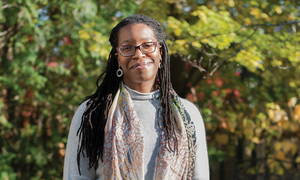
The shared history of African Americans and Indigenous Americans is rarely taught. TT talked to Professor Tiya Miles about why we can’t understand American history without it.
the moment
Learning for Justice 2025 Wrapped
“The ebbs and flows of history show us how oppressed groups have shifted power to advance our civil and human rights. The challenge of our time is who will control the political power so democracy is fully realized and all our humanity is fully recovered.”
— Jalaya Liles Dunn, Director, Learning for Justice, from “Making Recovery Last: A Season for Radical Reconstruction”
- The Roles and Responsibilities of the President
- Understanding the Role and Responsibilities of the Department of Education
- Why the 1965 Voting Rights Act Is Crucial for Democracy
article
George Bernard Shaw
“I am of the opinion that my life belongs to the community, and as long as I live it is my privilege to do for it whatever I can.” — George Bernard Shaw Download poster
the moment
Practice Self-care Now and Next Year
A pandemic rages on, police violence continues to affect Black communities, and this school year is like no other. We know anxiety and burnout have been commonplace this year, and we hope you can find time to pause to practice self-care. These resources can help you reflect, rest and refresh so that you can be present for yourself and your students in 2021.
- Self-care Can Be Social Justice
- The Value of Educator Self-Care
the moment
Remember the March on Washington
As we remember the March on Washington for Jobs and Freedom of 1963, it’s critical not to whitewash this history. Contextualize the campaign and the struggle associated with it, including the impact of the march’s organizer, Bayard Rustin—an openly gay Black man. That also includes complicating the event’s most iconic figure, Dr. Martin Luther King, and his famous “I Have a Dream” speech. These resources can help.
- Ten Things to Know About the March on Washington
- Gary Younge: Heroes Are Human
- Teaching About King’s Radical Approach to Social Justice