We have to prepare students—and ourselves—to communicate, question and work our way through a disconnect when the outside world spills into the classroom.
Shamari Reid, Ed.D. (he/him), is an assistant professor of teaching and learning at New York University. He has taught Spanish, English as a new language, and ELA at the elementary, secondary, and post-secondary levels in Oklahoma, New York, Uruguay, and Spain. He is the creator and host of the podcast Water for Teachers. Shamari is also the author of the book Humans Who Teach: A Guide for Centering Love, Justice, and Liberation in Schools. As a scholar–educator, Shamari’s work centers love as a moral imperative in social justice education and as a path toward culturally sustaining school
TT Voting and Democracy Grants fund projects that encourage students to become empowered advocates for voting in their communities. Grants and School Programs Manager Jey Ehrenhalt spoke with grantee Sarah Emmett about the work her students will be doing this fall.
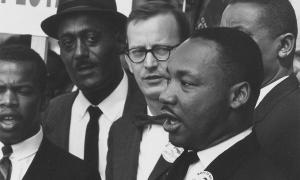
For many educators, the 50th anniversary of Dr. King’s assassination prompted reflection on how he and the causes he championed continue to shape our lives.
With or without the latest headlines from the White House, immigration is worthy of class discussion, and teachers should be ready to facilitate that discussion.
In science classes, we teach students to think carefully about the relationship between observation and hypothesis. Let’s encourage them to use that thinking to create a more just world.
Are you preparing to register future voters in your school community? These recommendations from experts in the field can help you lead safe, inclusive voter registration drives. Best Practices for High School Voter