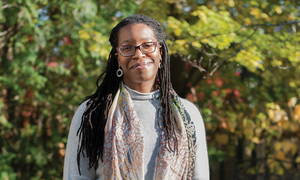
The shared history of African Americans and Indigenous Americans is rarely taught. TT talked to Professor Tiya Miles about why we can’t understand American history without it.
Clarice Brazas (she/her) holds an Ed. S. in Instructional Technology from the University of West Georgia. She is in her 13th year of teaching and is always looking for ways to improve her craft. The first three years of her career were spent working with students who had emotional and behavioral needs, which early on gave her the desire to educate students in a holistic and engaging way. Currently, Clarice teaches Humanities at The U School, an open admission, learner-centered school in the School District of Philadelphia. After moving to Philadelphia from Atlanta in 2017, she was introduced
Kumu Hina, a teacher at Hālau Lōkahi (a public charter school in Hawaii), speaks about her transition to the “place in the middle” and her mission to preserve the true meaning of aloha.
There are several reasons why TT materials may be more commonly used in enrichment courses than their foundations or methods counterparts. It may be that faculty teaching these classes have more flexibility to
Hillary Rodham Clinton delivered this speech at the United Nations International Human Rights Day on December 6, 2011. The day commemorates the UN's adoption of the Universal Declaration of Human Rights.
This piece is a resource for the Teaching Tolerance article Making Numbers Count.A Rhode Island math teacher offers a new model for analyzing social issues.