During Brain Share, small groups of students rotate through stations, discussing and recording concepts from central texts. This strategy is a modified combination of gallery walks and jigsaw.
The winner of the 2012 presidential election will face huge challenges when it comes to education. So we asked our readers to tell this year’s candidates why students matter, what they need and how to improve schools.
Carol D. Lee has developed a framework for the design and enactment of curriculum that draws on the forms of prior knowledge that traditionally underserved students bring to classrooms. She is the author of Signifying as a Scaffold for Literary Interpretation: The Pedagogical Implications of an African American Discourse Genre. She is co-editor, with Peter Smagorinsky, of Neo-Vygotskian Perspectives on Literacy Research. Lee recently completed a research project in a Chicago inner city high school that involves restructuring the English Language Arts curriculum in ways that build on social and
Responsible parent and caregiver groups are focusing on children’s right to inclusive and equitable education—in direct opposition to politically motivated “parents’ rights” groups with discriminatory agendas that harm young people.
This story follows a girl who befriends the first African American to attend High Point Central High School, as a result of desegregation. What begins as an unintended and awkward experience in the cafeteria, becomes a strong and admirable friendship.
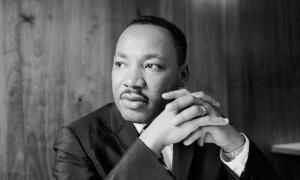
On the anniversary of Dr. King's assassination, we encourage teachers to break through the simplistic King narrative and share his righteous anger at poverty and militarism.