article

164 Results

lesson
Mary McLeod Bethune
In this lesson, students will read an excerpt of an interview given by Mary McLeod Bethune and will learn that she founded the Daytona National and Industrial School for Negro Girls (now Bethune-Cookman College) in 1904. Through close reading, they will explore and discuss connections between events from Bethune’s life experiences and their own lives, and connections between past and current events.
May 17, 2012
the moment
Teaching About the Montgomery Bus Boycott
The Montgomery Bus Boycott began on December 5, 1955, and lasted over a year. It’s difficult to overstate the influence of the boycott’s strategy, successes and leadership on how the Civil Rights Movement of the coming decades took shape. In our newest article, we examine the history of the Montgomery Bus Boycott through the lens of Learning for Justice’s newest framework, Teaching the Civil Rights Movement, and we recommend resources that help provide a fuller account of this pivotal event.
- Teaching About the Montgomery Bus Boycott
- Teaching the Civil Rights Movement
- ‘Browder v. Gayle’
lesson
Mary Church Terrell
In this lesson of the series, “Beyond Rosa Parks: Powerful Voices for Civil Rights and Social Justice,” students will read and analyze text from “The Progress of Colored Women,” a speech made by Mary Church Terrell in 1898. Terrell was the first president of the National Association of Colored Women (NACW), an organization that was formed in 1896 from the merger of several smaller women’s clubs, and was active during the period of Jim Crow segregation in the South.
May 11, 2012
article
Toolkit for "Browder v. Gayle"
Although the Montgomery Bus Boycott was successful in galvanizing the civil rights movement and promoting awareness of the injustice of segregated busing, Browder v. Gayle provided the legal basis for ending transportation segregation in Alabama. Despite its importance, the Browder v. Gayle case remains relatively untaught civil rights history.
article
Portfolio Activities for “Healing Touch: Susie King Taylor—Civil War Teacher and Nurse”
Grades: 4-8 Subjects: Social Studies, Reading and Language Arts, ELL/ESL Categories: Race and ethnicity; History Story Corner is a student-directed feature in Teaching Tolerance magazine. In the current issue, we tell
article
BROWN V. BOARD: The United States, Circa 1954
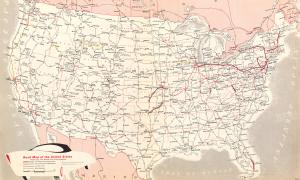
The state of the union when the Brown decision came down.
article
Where Scholars Disagree: How SCOTUS Influenced the Civil Rights Movement
Scholars are divided on the role of the U.S. Supreme Court in the civil rights movement. This blogger, a history teacher, explains why this debate is a valuable lesson.
article
Listening and Learning: A Conversation With Valda Harris Montgomery

Valda Harris Montgomery, who witnessed pivotal moments of the Civil Rights Movement in Montgomery, Alabama, emphasizes the importance of learning the honest history of the movement.
article
Looking Back at Civil Rights—and Looking Ahead
Like the more than 22,000 students who visit the Civil Rights Memorial Center each year, Brittney Johnson loved the fountain. The 10-year-old Montgomery, Ala., native had never been to the memorial center, even though it’s just a few miles from her house. And like most visitors she was instantly drawn to the circular black granite fountain out in front. This unique piece of architecture, designed by Maya Lin, is engraved with the names of 40 civil rights martyrs. Next to it stands a wall of water that cascades transparently over Martin Luther King Jr.’s well-known paraphrase of Amos 5:24 -- We will not be satisfied until justice rolls down like waters and righteousness like a mighty stream.