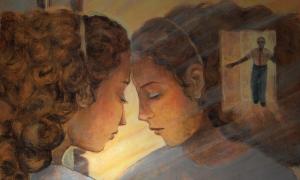
In 2010, the Southern Poverty Law Center interviewed 150 immigrant women who left Latin American nations in search of a better life in the United States. Most of them landed in physically crippling, low-paying jobs that make our lives easier but have rendered them voiceless and invisible.
Help young students learn the meaning and value of Identity, Diversity, Justice and Action—the four domains of the Learning for Justice Social Justice Standards. Find out how to implement these activities in your classroom with this exciting webinar!
Sarah Shear is an assistant professor at Penn State University-Altoona, where she teaches courses on social studies education and education foundations. Sarah earned her doctorate in learning, teaching and curriculum from the University of Missouri in 2014 with an emphasis in social studies education and indigenous studies. Her primary research focuses on teaching and learning K-12 social studies within indigenous contexts, including work with social studies educators in New Mexico and Oklahoma. Sarah's other research includes examining race and settler colonialism in K-12 social studies
I love to receive letters. When I was a little boy, I lived on a straight street where I could see the mail truck coming from a long way off. After the mailman stopped in front of our house, I ran with hope in my heart down our front walkway, between our two giant maple trees and across the street to our mailbox. Would there be a letter for me? Was someone in the world thinking of me?
My third-grade daughter has no idea what it’s like to have a brother with autism. Neither do I. So we are lounging on this Sunday afternoon in February, munching on Teddy Grahams, attempting to understand Catherine’s life. Catherine, 12, is David’s sister and his teacher; David has autism. Mostly, Catherine teaches her brother about life’s rules, over and over again. He forgets. She reminds him.
Thursday and Friday mornings, I have cafeteria duty at my elementary school. I always smile when our younger students come through the breakfast line. Their heads are at the level of the serving racks, so they have to hold their hands up to get their trays of food. I have to help them or we will have pancakes and syrup everywhere.
This chapter depicts the violent relationship between Tejanos (Texas Mexicans) and Texas Rangers in the late 19th century and early 20th century, culminating in the notion that “though a Tejano spent his life under the watchful eyes of whites, he was beneath all notice in death.”