Recognize the possibilities of the power of the vote, encourage your friends and family to engage in civic action, and become a change agent in your community.
Episode 12, Season 4 During the Harlem Renaissance, more Black artists than ever before were asking key questions about the role of art in society. Oftentimes the Harlem Renaissance is misconstrued as a discrete moment
Talla Cisse is an educator and graduate student in Wilmington, Delaware, and a 2019 Lee Summer Fellow at Teaching Tolerance. Talla taught American history as a founding teacher for Apex Collegiate Academy in Baton Rouge. He is currently pursuing a master’s degree in policy at the University of Delaware. In his free time, Talla works with the Delaware Youth Advocacy Council students to develop a deep understanding of the landscape of education policy and the advocacy process.
Bayard Rustin was an African American leader who worked for the Fellowship of Reconciliation (FOR) in the 1940s and 1950s for equal rights for all Americans using nonviolence. In this story, he writes about the struggle for an African American man to order a simple hamburger at a restaurant in the Midwest.
Our youngest students deserve a truthful, age-appropriate account of our past. These resources for elementary educators include a first-of-its-kind framework.
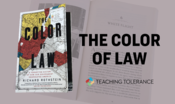
Join Learning for Justice and Director Maureen Costello as we explore the role of U.S. segregation in everything from housing to employment to wealth accumulation—and the policies that made it all happen. Tune in to learn why the “bootstraps theory” doesn’t hold up and gain some useful tools for your classroom practice.
Learning for Justice and cohosts from SPLC’s Intelligence Project and American University’s Polarization and Extremism Research Innovation Lab (PERIL) present a webinar on combating the radicalization of young people online.