article

2,412 Results
article
An Intersectional Lesson From Reconstruction
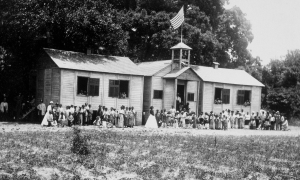
The lessons of Reconstruction extend beyond the history classroom.
article
How We Live Our Lives
Teaching Tolerance director Lecia J. Brooks reflects on the still segregated nature of our public schools.
article
Going Deeper Than Skin Color
Among my third-graders, conflicts often arose over the issue of skin color. “Your mama left you in the oven too long. You look just like a burnt cookie!” “Oh yeah, well you look like a white boy. I bet you ain’t even black.” As a young white teacher coming into a school that is about half African-American and half Latino, I knew there would be racial conflicts, but I didn’t know how they would manifest themselves. I assumed that both groups’ first concern would be the oppression and racism from white people. I was not expecting the intense criticism that I found within the African-American community of its own members.
article
“Say Yes” Again
Critical literacy can expose the assumption that whiteness is “normal” and provide students support for talking about difficult topics.
article
Teaching About Activism: The Era of Antebellum Reform
Read why this teacher thinks more social studies education should focus on activism in the past.
article
Rewriting History—for the Better

More states are including American Indians in their mainstream curricula.
author
professional development
Juliette Hampton Morgan: A Lesson for Teachers
This piece accompanies the Juliette Hampton Morgan lesson series. Participants learn the importance of being an ally through the story of Juliette Hampton Morgan, a white woman who lived in Montgomery, Alabama, during segregation.
July 6, 2009
article
Atheist Students Come Out of the Closet
Religious topics have long been a touchy subject in public schools and none of them touchier than atheism. For young people though, the taboo surrounding unbelief appears to be disappearing. Recent surveys have found that younger Americans are the least likely to be religious. According to the American Religious Identification Survey, 29 percent of 18-29 year olds are religiously unaffiliated, compared with 15 percent of the population as a whole. And a 2006 Pew Research poll found that 1 in 5 young people said they have no religious affiliation, nearly double the proportion of the late 1980s.