In this essay, the author considers what it means to live in a democracy of "majority rule" and where minorities find their place and voice (or lack thereof in such a system).
In this excerpt, Garang tells his story of how he became a lost boy when war destroyed his village. Walking with thousands of other orphaned boys, Garang travels thousands of dangerous miles from southern Sudan to a refugee camp in Ethiopia.
by
Mary Williams and R. Gregory Christie (illustrator)
Journalist Christopher Solomon writes of his interview with Kevin Connolly, a writer, photographer and medal-winning skiier, who was born without legs.
The American Psychological Association (APA) published “Facing the School Dropout Dilemma: The interaction of sexual orientation with school dropout rates” on its website in 2012. The APA is widely regarded as the most prominent professional organization for psychologists in the United States.
During World War II, a young German girl, Rose Blanche, inadvertently discovers a concentration camp not far from her town. She travels there frequently, taking food to the children on the other side of the barbed wire and meets a haunted fate the day she discovers the camp is gone.
Margaret Batchelder writes to President Theodore Roosevelt to tell him how women inspectors welcome immigrants—with smiles and encouragement. Although not allowed to question the immigrants, the women make a difference in the immigrants' first experiences on shore.
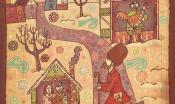
As the tsar sets out across the countryside in disguise, he meets two very different families and learns of the differing people (and their motives) living in his land.
Kumu Hina, a teacher at Hālau Lōkahi (a public charter school in Hawaii), speaks about her transition to the “place in the middle” and her mission to preserve the true meaning of aloha.