Doreen Rappaport tells the story of a young Suzie King Taylor and her brother who attended a secret school for black children in Georgia in the mid-1800s. Later on, Taylor would become the first black woman to teach openly in a freedmen's school.
A Democratic laborer comments on the problem of abolitionism in the North as well as the South, claiming that the emancipation of enslaved people will result in the damaging of white labor rights and opportunities.
A white educator reflects on this reality: Most teachers in the United States are white, which means that many children of color don’t have academic role models who look like them.
This chapter details the Chinese involvement in building the transcontinental railroad and the friction it caused between them and white workers, whom Chinese workers displaced from their jobs due to their willingness to work for less and not join labor unions.
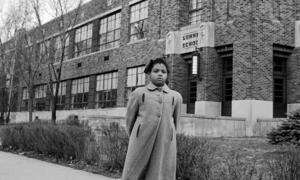
As we remember Linda Brown Thompson, we must also consider the reality of the world she lived in when, at the age of 9, she became the face of school desegregation.
LFJ Director Jalaya Liles Dunn explains that “the victories for justice must be fought for and by ordinary people in the South together with allies from other parts of the nation.”
In 1957, nine black schoolchildren enrolled at Central High School in Little Rock, Ark., and compelled the nation to live up to its promise of equality. Fifty years later, Central High's teachers and students revisit the past to help shape the future.