The distrust between the Jewish community and African-American community in the Crown Heights neighborhood of Brooklyn in the 1990s reached an all-time high when a runaway car struck two children.
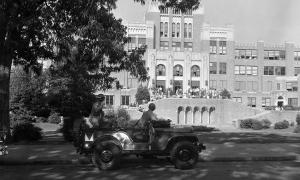
This toolkit suggests ways to use primary sources to help students uncover the realities of segregation and how it was deliberately perpetuated in the United States.
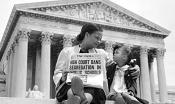
Chief Justice Earl Warren wrote the opinion for Brown v. Board of Education of Topeka, Kansas, a groundbreaking case that overturned the "separate but equal" standard set forth in Plessy v. Ferguson. The Supreme Court decided this case unanimously on May 17, 1954.
Silent Sustained Reading (SSR) is a staple of many classrooms. At my school it lives in Advisory, a 50-minute mixed-grade class that balances literacy development with study hall and school-culture building. The goal of SSR is simple: For 30 minutes twice a week the entire school population is reading silently—and enjoying it.
As a middle school student, I was perplexed by a quote by George Santayana that my history teacher posted on the wall. It read, “Those who cannot remember the past are condemned to repeat it.” As a budding history teacher, it continued to puzzle me.
[2024] This case study and report by NWLC and SPLC demonstrates how critical insights can come from centering Black girls in the school safety conversation.