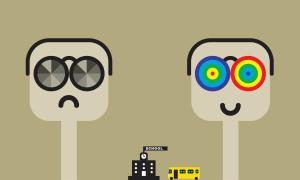
In fiction, children with disabilities are often still segregated, labeled, lonely and lost. These titles will help bring your school’s library into the age of inclusion.
We have to prepare students—and ourselves—to communicate, question and work our way through a disconnect when the outside world spills into the classroom.
Our latest magazine issue, a brand-new guide for serving English language learners and posts about school choice have inspired a lot of dialogue with our readers.
Teaching Tolerance and the Tanenbaum Center for Interreligious Understanding teamed up to offer educators a free webinar series: Religious Diversity in the Classroom.
Nefertari Yancie, Ph.D., credits her family’s commitment to asking courageous questions, seeking answers and taking action as the impetus for her career in the classroom.
Kawania Wooten’s voice tightens when she describes the struggle she’s having at the school her son attends. When his class created a timeline of civilization, Wooten saw the Greeks, the Romans and the Incas. But nothing was said about Africa, even though the class has several African American students.
Sometimes school tracking sets students up for failure, academically and socially. My students with disabilities, who require extra academic assistance, often ended up on the short end of the stick. Because they were in all of the same classes together I noticed that they also clung to each other in the cafeteria. They had a difficult time fitting in and making friends with other students.