article

2,754 Results
article
Toolkit for "Closed for Business"
This toolkit distills information from “Closed for Business” into nine questions (to ask and answer) about school closures. Integrate these questions into your next discussion about education reform.
article
Straight Talk About the N-Word
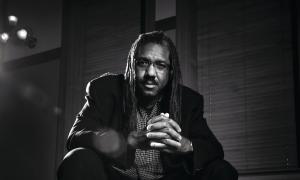
Sean Price's interview with Arizona State University Professor Neal A. Lester. Lester has twice taught courses on the n-word—and found there’s plenty to talk about.
article
We Rest Our Case: American Slavery Is Widely Mistaught
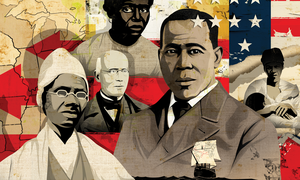
After hearing from skeptics about our Teaching Hard History report findings, TT Director Maureen Costello came across striking new evidence that the project is necessary.
article
professional development
10 Tips for Starting a World Religions Curriculum
How to develop a world religions curriculum with inclusion and sensitivity.
August 6, 2009
article
Showing Our Best on MLK Day
In classrooms all over the country, posters hang on walls bearing the face of Martin Luther King, Jr. Libraries put out displays of books about his life. Bulletin boards are decorated with phrases from famous speeches. Many will remain up throughout the school year, not just for the federal observance of King’s birthday on Monday.
article
A Chance for Justice at Low-Income Schools
A legal settlement reached in Los Angeles Tuesday could reverberate through schools in low-income neighborhoods across the country. The Board of Education there approved a deal with the American Civil Liberties Union and other groups that would radically limit the practice of laying off teachers based solely on seniority.
article
Arizona Legalizes Racial Profiling
Hundreds of high school and college students gathered around the state capitol in Phoenix, Arizona, on Friday. They were there to convince Gov. Jan Brewer to veto Senate Bill 1070. These young protesters were disappointed though. Brewer signed the bill and instantly set back relations between whites and Latinos in Arizona and other parts of the country.
article
Race Conversation Must Go Deeper
When I was in fifth grade and new to suburbia, my teacher introduced the concepts of racism, civil rights and fairness. And she began the task of helping 10-years olds—all of us white—learn how to talk about race in constructive ways. I’d moved from a gritty urban neighborhood where whites, blacks and Puerto Ricans lived together rather warily. My parents maintained a chilly silence on the issue of race, although they forbade racial epithets; on the street I heard plenty. In this place, the black kids came mostly from the projects, the Puerto Ricans lived in apartments and the better-off among the white families might have an entire house. I knew that race divided.