article

1,123 Results
lesson
Stereotypes and Tonto
This lesson revolves around Sherman Alexie’s poignant yet humorous and accessible essay, “I Hated Tonto (Still Do).” It explores the negative impact that stereotypes have on the self-worth of individuals and the damage that these stereotypes inflict on pride in one’s heritage. The reading is supported by a short video montage of clips from Western films. The clips offer students the opportunity to evaluate primary sources for bias and bigotry, as well as providing context for the protagonists’ experiences in the essay.
March 17, 2010
text
Informational
Universal Declaration of Human Rights, 1948
The U.N. General Assembly adopted the original version of the Universal Declaration of Human Rights in 1948. The intention was to safeguard the international community against atrocities such as occurred during World War II.
July 2, 2014
article
Lessons of 1964: The Movement Continues
This year's civil rights anniversaries can be a call to action.
article
“Own Your Voice”

Journalist and educator Maria Hinojosa has a lot to say about how to elevate student voices.
article
Toolkit for "Segregation by Design"
This toolkit suggests ways to use primary sources to help students uncover the realities of segregation and how it was deliberately perpetuated in the United States.
publication
Section III: Instruction
Integrating Queer Voices into the Curriculum It may seem like a minor adjustment for a teacher to mention a queer figure in history or analyze a queer character in a work of literature. But affirming an LGBTQ student’s
October 29, 2018
article
Insist on Persistent Women: Women's History in the K-8 Classroom

Young people need stories of persistent women who have fought for gender equality. Women's History Month is a good time for us to recommit to teaching those stories.
publication
Social Justice-Based Community Facilitation
Behavior management grounded in social justice principles creates connections rather than divisions.
May 26, 2023
article
What It Means To Learn for Justice
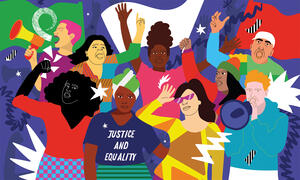
LFJ Director Jalaya Liles Dunn emphasizes that “We increase our power to foster change when we are in community with one another – deliberating, deciding and taking action.”