After Charlottesville, this black teacher of black and brown students knew that her kids would not want another lesson about bigotry and racism. Here’s what she did instead.
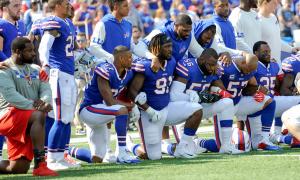
With the spotlight once again on the act of kneeling during the national anthem, students will bring this conversation to the classroom. Here’s how to guide that discussion.
LFJ Director Jalaya Liles Dunn emphasizes that “We increase our power to foster change when we are in community with one another – deliberating, deciding and taking action.”
As a child, Jo Ann Bland participated in the Selma, Alabama, march that became known as Bloody Sunday. In this video and Q&A excerpt, Bland inspires us to civic action.
In this lesson of the series, “Beyond Rosa Parks: Powerful Voices for Civil Rights and Social Justice,” students will read and analyze text from “The Progress of Colored Women,” a speech made by Mary Church Terrell in 1898. Terrell was the first president of the National Association of Colored Women (NACW), an organization that was formed in 1896 from the merger of several smaller women’s clubs, and was active during the period of Jim Crow segregation in the South.
In “Politics of the New South,” Maria Hinojosa revisits Clarkston, Georgia, featured in a previous episode and notable for its immigrant population. It’s three days before an election in which three former refugees are running for city office for the very first time.