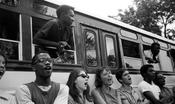
The freedom riders, black and white, joined together to effect change. Traveling across the South while enduring ridicule and pain, they helped ensure that doors were open to all people, regardless of skin color.
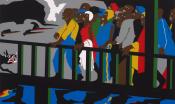
This 1974 print depicts Bloody Sunday, when a group of nonviolent protestors marching for voting rights in 1965 faced police violence at the foot of the Edmund Pettus Bridge in Selma, Ala.
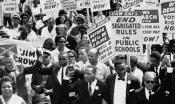
This photograph from the Associated Press shows Martin Luther King Jr. in a crowd of people at the March on Washington for Jobs and Freedom on Aug. 28, 1963.
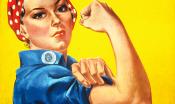
The iconic poster was designed by J. Howard Miller during World War II for Westinghouse Electric. In recent decades, the image has gained wide popularity as an emblem for feminism and various other political and social movements.
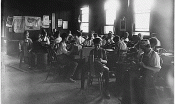
Doreen Rappaport tells the story of a young Suzie King Taylor and her brother who attended a secret school for black children in Georgia in the mid-1800s. Later on, Taylor would become the first black woman to teach openly in a freedmen's school.
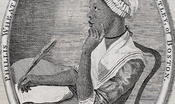
In this poem, the speaker explores the relationship between her Christian beliefs and her enslavement. She reminds her readers of the Christian belief that anyone, regardless of their race, can follow Christianity and be saved.
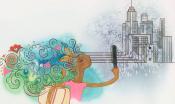
Sean McCollum gives an account of writer Julia Alvarez's move to the United States from the Dominican Republic as a young girl. Although Alvarez struggled to fit in in this unfamiliar place, she finally found a comfortable niche in her writing.
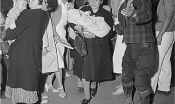
Following the attack on Pearl Harbor, over 110,000 Japanese Americans, mostly U.S. citizens, were incarcerated in “War Relocation Camps.” These photographs were taken at Manzanar, one of the ten Japanese internment camps, in 1942.