article

400 Results
page
Summary Objective 5
Students will describe the roles that slavery, Native nations and African Americans played in the Revolutionary War. Maps to Key Concepts 2, 3, 5, 9 & 10 What else should my students know? 5.A The Declaration of
December 18, 2017
article
How My Third-Graders and I Address Consent

A TT Award winner shares how she teaches her elementary students about consent throughout the year. It’s not too early—or too late—to start.
article
Kindness Attracts Kindness
Josh and Kevin don't understand why Carl is always angry at recess, and Carl doesn't understand why they're playing so dangerously. Maybe some good advice will help.
lesson
Discrimination in Banned Books
The last week of September is Banned Books Week. Many teachers use the event to talk about free speech with their students. I also use it to begin a conversation about discrimination.
August 24, 2009
article
text
Informational
Homeless
In this vignette, eight-year-old Mikey spends two nights in a homeless shelter, where he and his family are too afraid to sleep for fear that someone would steal their things. The family then meets a caseworker who helps them into a temporary apartment while they work toward a more permanent home.
July 5, 2014
text
Informational
An Excerpt from the United States Declaration of Independence
The Declaration of Independence proclaimed the thirteen colonies' separation from Great Britain and set the nation's civic standard that "all Men are created equal."
July 10, 2017
article
Students Weigh in on the Golden Globes, #MeToo and #TimesUp
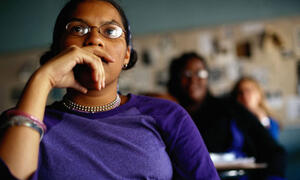
After watching highlights from the Golden Globes, this high school class engaged in some deep discussions about advocacy.
text
Multimedia
In a trailer park, isolated mothers pursue a shared dream
“Zindy is a Mexican immigrant and domestic abuse survivor who lives with her five children at an isolated Atlanta-area trailer park. She notices that other park residents — immigrants from Mexico and Central America — struggle with the same issues she does, such as English fluency, reluctance to trust others, and limited access to education and other services. Zindy views their shared isolation as an opportunity and unites mothers in the community with similar cultural norms and practices — not to address shared problems, like domestic abuse, but to realize their common dreams for their children. This is the story of how they forged cultural ties and mutual trust, and the confidence to seek outside help in creating an escuelita (“little school”).”
June 27, 2019