This chapter depicts the violent relationship between Tejanos (Texas Mexicans) and Texas Rangers in the late 19th century and early 20th century, culminating in the notion that “though a Tejano spent his life under the watchful eyes of whites, he was beneath all notice in death.”
“The Ponca’s challenge of the U.S. government marked a turning point on the long path of Indian resistance. Increasingly, after Standing Bear v. Cook, the fight for Native rights would shift from the battlefields to the courtrooms of the growing nation.”
In this excerpt, Garang tells his story of how he became a lost boy when war destroyed his village. Walking with thousands of other orphaned boys, Garang travels thousands of dangerous miles from southern Sudan to a refugee camp in Ethiopia.
by
Mary Williams and R. Gregory Christie (illustrator)
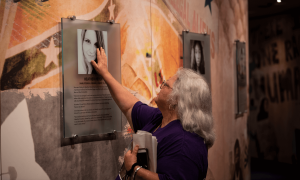
TT Staff Writer Coshandra Dillard sits down with Susan Bro to discuss her activist work, her hopes for the future and the legacy of her daughter, Heather Heyer.
To cover is to downplay aspects of our identity that make us different from mainstream society. Kenji Yoshino argues that, although we live in an age where the law prohibits many forms of discrimination, people still face pressure to hide who they are.
The title “Before Rosa Parks” loosely links a number of lessons that address African-American women who were active in the fight for civil and human rights before the 1950s. This lesson highlights Susie King Taylor, the only black woman who wrote a narrative about her experiences working with soldiers during the Civil War.