article

4,107 Results
article
The Civil Rights Act of 1964 — Title IV: Equal Education for All
A decade after Brown, Title IV again called for desegregation of public schools. Studying images of segregated schools close in time and place can help students build a picture of the wide discrepancies between educational facilities.
text
Literature
Mama Played Baseball
With her husband away fighting in World War II, Amy's mother gets a job playing baseball in the first professional women's league.
July 7, 2014
article
Toolkit for "One Hundred Years in the Making"
This toolkit for “One Hundred Years in the Making” provides instructional ideas to experience the new Smithsonian National Museum of African American History and Culture (NMAAHC) without traveling to Washington, D.C.
text
Literature
Margaret Batchelder, Immigrant Inspector (1903)
Margaret Batchelder writes to President Theodore Roosevelt to tell him how women inspectors welcome immigrants—with smiles and encouragement. Although not allowed to question the immigrants, the women make a difference in the immigrants' first experiences on shore.
July 7, 2014
article
Why Does the Buddha Have Long Ears?
A North Carolina museum educator invites students to explore religious diversity through art.
text
Visual
Confrontation at the Bridge
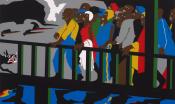
This 1974 print depicts Bloody Sunday, when a group of nonviolent protestors marching for voting rights in 1965 faced police violence at the foot of the Edmund Pettus Bridge in Selma, Ala.
July 2, 2014
text
Informational
Covering
To cover is to downplay aspects of our identity that make us different from mainstream society. Kenji Yoshino argues that, although we live in an age where the law prohibits many forms of discrimination, people still face pressure to hide who they are.
July 2, 2014
article
Classroom Simulations: Proceed With Caution
Some educators think these widely-used teaching activities may do as much harm as good — at least in anti-bias learning.
article
Gary Younge: Heroes Are Human
A new book sheds light on the lesser-known struggles behind the March—and how students can benefit from learning about them.